
Double Eyelid Surgery in Singapore

Double eyelid surgery in Singapore is a popular procedure designed to create or enhance the double eyelid crease and eliminate excessive droopy skin. If you have been relying on eyelid tape or glue for an extra crease and want a more permanent solution, double eyelid surgery may be the ideal choice for you.
What is Double Eyelid Surgery?
Double eyelid surgery, or blepharoplasty eyelid surgery, is a cosmetic procedure that creates a natural-looking crease in the upper eyelid, enhancing the appearance of the eyes. It is often sought to achieve a more symmetrical or defined look while addressing issues such as sagging skin or puffy eyelids. This surgery is tailored to individual needs, with options including incisional and non-incisional techniques, ensuring results that align with your aesthetic goals.
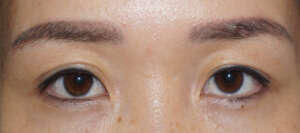
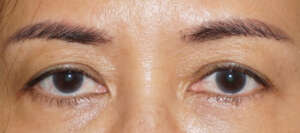
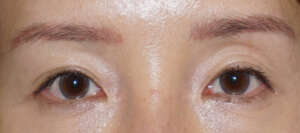

Examples of cosmetic concerns prior to surgery
Incisional Blepharoplasty
Incisional blepharoplasty is a surgical method where precise incisions are made along the eyelid to create a lasting double eyelid crease. This approach is ideal for individuals with thick skin, excess fat, or significant sagging, as it allows for the removal of excess tissue and sculpting of a well-defined eyelid. The results are long-lasting and customisable to suit your preferences.
Non-Incisional Blepharoplasty
Non-incisional blepharoplasty, also known as the suture technique, is a minimally invasive option for creating double eyelids. This method uses small stitches to create the crease without making large incisions, making it suitable for those with thin eyelids and minimal excess skin. Recovery is quicker compared to the incisional method, and the results appear natural within a shorter period of time. However, some patients may experience fading of the double eyelids over time.
Am I a good candidate for blepharoplasty?
Generally speaking, there are two types of blepharoplasty: cosmetic blepharoplasty and functional (medical) blepharoplasty.
Aesthetic eyelid surgery refers to double eyelid surgery that is performed to improve the appearance of the eyes. In the younger East Asian patient, this usually means surgery to create a lid crease in the upper eyelid that previously did not have one. Sutures alone or surgery with sutures is employed to create the double eyelid crease. In older patients, aesthetic eyelid surgery refers to removing excess skin and fat tissue from the upper eyelid to restore a more youthful appearance. It usually involves crease formation as well. Occasionally, where the patient is noted to have a droop of the upper eyelid in addition to excess skin and fat, cosmetic ptosis and upper blepharoplasty have to be performed simultaneously to achieve a good outcome. Lower blepharoplasty is performed to eliminate or reduce the appearance of eyebags which can present from the mid-thirties. Insurance and Medisave do not cover any form of cosmetic surgery– such as double eyelid surgery– in Singapore.
Functional (medical) blepharoplasty is only performed for elderly patients with such an excess of upper eyelid skin that the skin fold begins to cover part of the pupil. There are stringent criteria to be met, and both photographic and perimetric (visual field) evidence are required before one is allowed to claim insurance or use Medisave to pay for the blepharoplasty eyelid surgery in Singapore.
If one has a cosmetic issue with the eyelids or has such severe excess skin that it starts to affect the visual field, then one could consider aesthetic or double eyelid surgery in Singapore. A detailed examination and in-depth discussion with your eyelid plastic surgeon will help to determine the type of blepharoplasty that is most appropriate for your eyelids.


What are the differences between a suture technique and an incisional technique for upper blepharoplasty?
There exist many double eyelid suture techniques to create an upper eyelid crease without a long skin incision. The technique used for upper eyelid surgery is dependent on surgeon preference. Essentially, whichever suture technique is used, the aim is to place fine, permanent sutures in a specific manner through the upper eyelid so that a crease forms in the opening of the eye. This procedure has the advantage of minimising downtime, although significant bruising can occur on occasion. It is useful in younger patients, especially those with thinner upper lid tissue. It is not as useful in older patients or patients with bulky upper eyelid tissue. There is also greater potential for crease loss over time, although this is disputed by some surgeons who favour this technique.
The incisional technique for eye lift surgery involves skin incision and the formation of a fine surgical scar plane that allows a crease to form in eye opening. The advantage here is the ability to excise any excess skin, superficial muscle and fat that may contribute to the eyelid bulk. There is also the opportunity to add in a mini-lift and eyelash eversion for greater rejuvenation. In most individuals, the wound heals well after a few weeks and is often not visible after a few months.
Both techniques can be performed alone or in combination with a medial epicanthoplasty to achieve a more parallel crease.
A good discussion with your eyelid plastic surgeon will allow you to make the right decision in which technique is most appropriate for you, based on your preferences and the pre-operative eyelid features.
What are the differences between fat excision and fat preservation techniques in lower blepharoplasty?
In the 60s to 80s, the trend in lower blepharoplasty was lower eyelid surgery involving the removal of fat from the lower eyelid. It is now recognised that this was not the best approach as it often led to hollowing of the lower eyelid area, deeper eye sockets and darker eye circles which all had an ageing effect.
For the past two decades, surgeons have preferred fat preservation techniques, aiming to expose, release and reposition the bulging fat over the bony inferior orbital rim, particularly into the tear trough area between the eye bag and the nose. This allows the marked reduction or elimination of the eyebag without risking an ageing hollowing effect. Often, tightening of the lower lid by enhancing lateral support is performed as well to achieve the most optimal result.
Is revision surgery a common occurrence?
Revision surgery is not often discussed in-depth in the exciting lead up to cosmetic surgery. But it is good to be aware that it is a reality that one might encounter when one decides to proceed with cosmetic surgery. It can be minimised by a detailed pre-operative discussion on what one prefers as well as the limitations of the technique chosen. With an experienced surgeon, the likelihood is markedly reduced. However, even the best cosmetic surgeons do perform revision surgeries on their patients as complications do arise in a small percentage of patients. It is good to know that a slight adjustment of upper eyelid height or contour or a refinement of the crease in the early post-operative period is not considered revision surgery but rather a fine-tuning of the main procedure.
How much down time will I encounter?
Most eyelid surgeries will heal within two weeks. Stitches are removed between one to two weeks. Some bruising may still be evident at the end of two weeks but is not a major concern. As patients show a variable healing rate, it is best to dedicate two weeks of rest to allow for good post-operative care and optimal healing. Travel overseas is best avoided during the post-operative period as any troublesome problem, even if small, is best managed by your surgeon.
Find out more about double eyelid surgery or droopy eyelid surgery.
Choosing between the suture and incisional methods depends heavily on your existing eyelid anatomy and your desired aesthetic outcome.
The stitching or suture method is a minimally invasive technique where fine medical threads are used to create a crease without making a long horizontal incision; it is ideal for younger patients with thin eyelid skin and minimal fat.
Conversely, the cutting or incisional method involves a permanent surgical adjustment where excess skin or fat is removed to create a defined, lasting fold.
At Ava Eye Clinic, we evaluate your skin elasticity and fat distribution to recommend the best double eyelid surgery approach. While the suture method offers a faster recovery and no visible scarring, the incisional method is often necessary for those with puffy lids or significant skin laxity to ensure the results look natural and proportionate to your face.
One of the most common concerns patients have is the level of discomfort involved in the procedure. In reality, the surgery is very tolerable because we prioritise patient comfort through advanced numbing techniques.
Before the procedure begins, a local anesthetic is administered to the eyelid area, which may feel like a tiny pinprick for a few seconds. Once the area is numb, you will not feel any pain during the surgery itself, though you might perceive some light pressure or tugging sensations as our surgeons work. After the anesthesia wears off, most patients describe the feeling as a mild soreness or a tight sensation rather than sharp pain. At Ava Eye Clinic, we provide comprehensive post-operative care, including oral pain relief, to ensure your transition into the healing phase is as smooth and comfortable as possible.
The longevity of the suture method varies from person to person, but it is generally considered less permanent than the incisional method. Because the crease is held in place by medical-grade threads rather than a surgical scar, there is a small possibility, roughly 5% to 10%, that the suture may loosen or the crease may drop or become shallower over time, especially if the patient frequently rubs their eyes or has heavy eyelid skin.
If a patient finds that their crease has faded after several years, a touch-up procedure or a transition to the incisional method can be discussed to restore the desired definition.
The duration of the procedure depends on the complexity of your eyelids and the specific method being used. Generally, a suture-based procedure is quicker, often taking only about an hour to complete. An incisional procedure, which requires more meticulous detail in removing excess tissue and anchoring the new crease, typically takes between 1-2 hours. At Ava Eye Clinic, we do not believe in rushing the process; our surgeon takes the time to ensure optimal symmetry and a crease height that complements your eye shape. You should plan to be at the clinic for about two to four hours in total to allow for pre-operative preparation, the surgery itself, and a short observation period afterward to ensure you are feeling well before heading home.
The cost of creating a double eyelid fold in Singapore can vary significantly based on the surgeon’s experience, the need for an anaesthetist, the clinic facility fee, and whether the case is purely cosmetic or functional.
Generally, suture methods are more affordable, typically ranging from $3,000 to $5,000, while incisional methods can range from $5,000 to $8,000 or more. It is important to remember that the price usually includes the surgeon’s fee, facility charges, anesthesia, and post-operative medications. At Ava Eye Clinic, we provide a transparent breakdown of costs during your initial consultation. Investing in a specialist eye clinic ensures that you are paying for a surgeon who understands the intricate anatomy of the eye and eyelid, which is vital for both a beautiful aesthetic result and the long-term health of your eye.
In Singapore, MediSave claims for eyelid procedures are strictly regulated by MOH and are generally only applicable if the surgery is deemed medically necessary rather than purely cosmetic. If your double eyelid is created with a medical upper blepharoplasty or ptosis repair to manage excess overhanging skin or lid droop that physically obstructs your field of vision, you may be eligible to make a claim for a portion of the surgical costs. During your examination at Ava Eye Clinic, our specialists will perform a visual field test to determine if your eyelids are heavy enough to meet the clinical criteria for a functional claim. If the procedure is purely to create a crease for aesthetic reasons, it is considered a cosmetic enhancement and will not be eligible for MediSave or insurance coverage.
Recovery times vary between individuals, but most patients require about 5 to 7 days of rest before they feel comfortable appearing in public. For the suture method, swelling is usually minimal and subsides significantly within 3 to 5 days. For the incisional method, the social downtime is slightly longer; while you can return to sedentary work after a few days, the most visible swelling and bruising typically peak at day 2-3 and fade by day 7 to 10. We usually suggest that patients wait at least a month before attending social events, as it takes about a month or two for the early swelling to settle into a natural, refined crease. Most patients fare well with 2 weeks off work.
Most double eyelid procedures at Ava Eye Clinic are performed under local anesthesia with or without light sedation. This means you remain awake and can follow simple instructions, like opening and closing your eyes, which helps the surgeon check for symmetry during the procedure. Recovery is rarely described as painful; it is more commonly associated with a feeling of tightness, mild itch around the stitches, or mild bruising. We provide specific eye drops and ointments to keep the area hydrated and prevent irritation. Using cold compresses diligently for the first 48 hours is an most effective way to manage discomfort and speed up the resolution of swelling. Most patients find they only need mild over-the-counter painkillers for the first day or two.
While blepharoplasty eyelid surgery is generally very safe, every surgical procedure carries some risks. Temporary dry eyes are common as the blink reflex adjusts to the new lid shape, but this is usually managed readily with lubricating drops. Infection is extremely rare at Ava Eye Clinic due to our sterile surgical environment and post-operative antibiotic care. A triple eyelid effect, where an extra fold appears above the new crease, can sometimes occur if there is a lack of volume in the upper lid or if undesirable adhesions develop between the skin and underlying tissue. This can be avoided by ensuring an adequate amount of fat is left in the lid and by appropriate wound closure. If this develops despite best efforts, it may require a revision or filler injection. Choosing an experienced eye specialist minimises these risks, as we are trained to handle the delicate balance of eyelid fat and muscle to prevent hollow-looking eyes or multiple creases.
Absolute perfect symmetry is a rarity in nature, as almost everyone has slight differences in their bony eye sockets and brow heights. However, when the asymmetry is obvious to the eye, we can plan surgery to significantly reduce this asymmetry. By adjusting the lid height or crease height, removing different amounts of fat, or tightening the underlying muscles on each side, we can bring the eyes into much closer harmony. During your consultation at Ava Eye Clinic, we will analyse the differences between your left and right lids and advise on the appropriate surgery to address these differences.
